Revealing the Unseen with Camera Traps
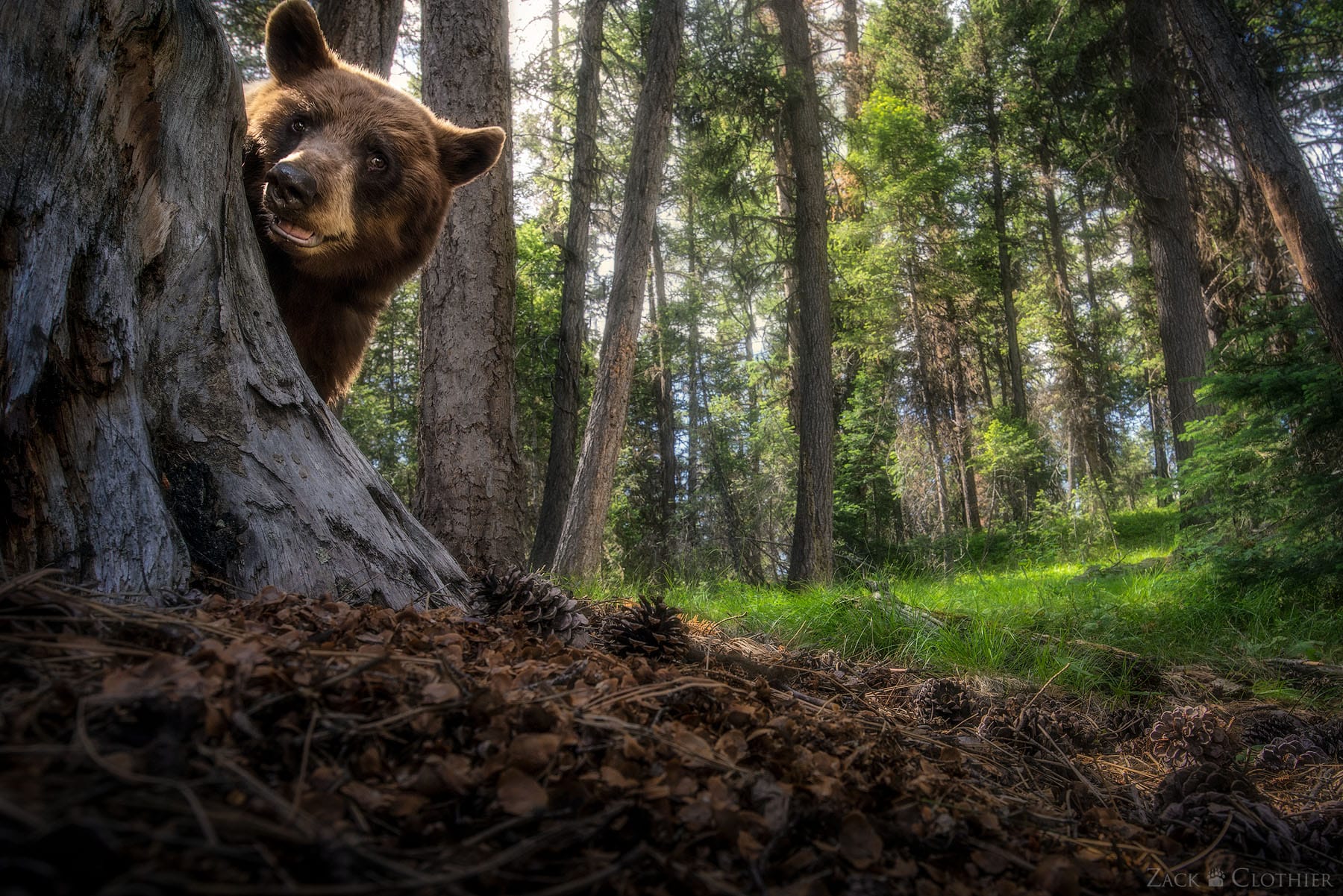
There is something about walking through the forest and knowing you are not alone, even when there is nothing in sight.
A track pressed into the mud. A faint scrape beneath a ponderosa pine. Fresh scat along a trail. Sometimes that is all an animal leaves behind—a few clues that suggest it passed through long before you arrived, or perhaps only minutes before. The animal itself may be long gone, but its presence remains.
For me, that has always been part of the fascination.
Nature and wildlife have been an integral part of my life for as long as I can remember, and I've spent years trying to photograph wild animals in ways that reveal more than simply what they look like. I want a photograph to create a sense of connection, to make the viewer feel as though they were standing there when it happened. But some of the animals I am most drawn to are also the ones least likely to stand in front of a camera.
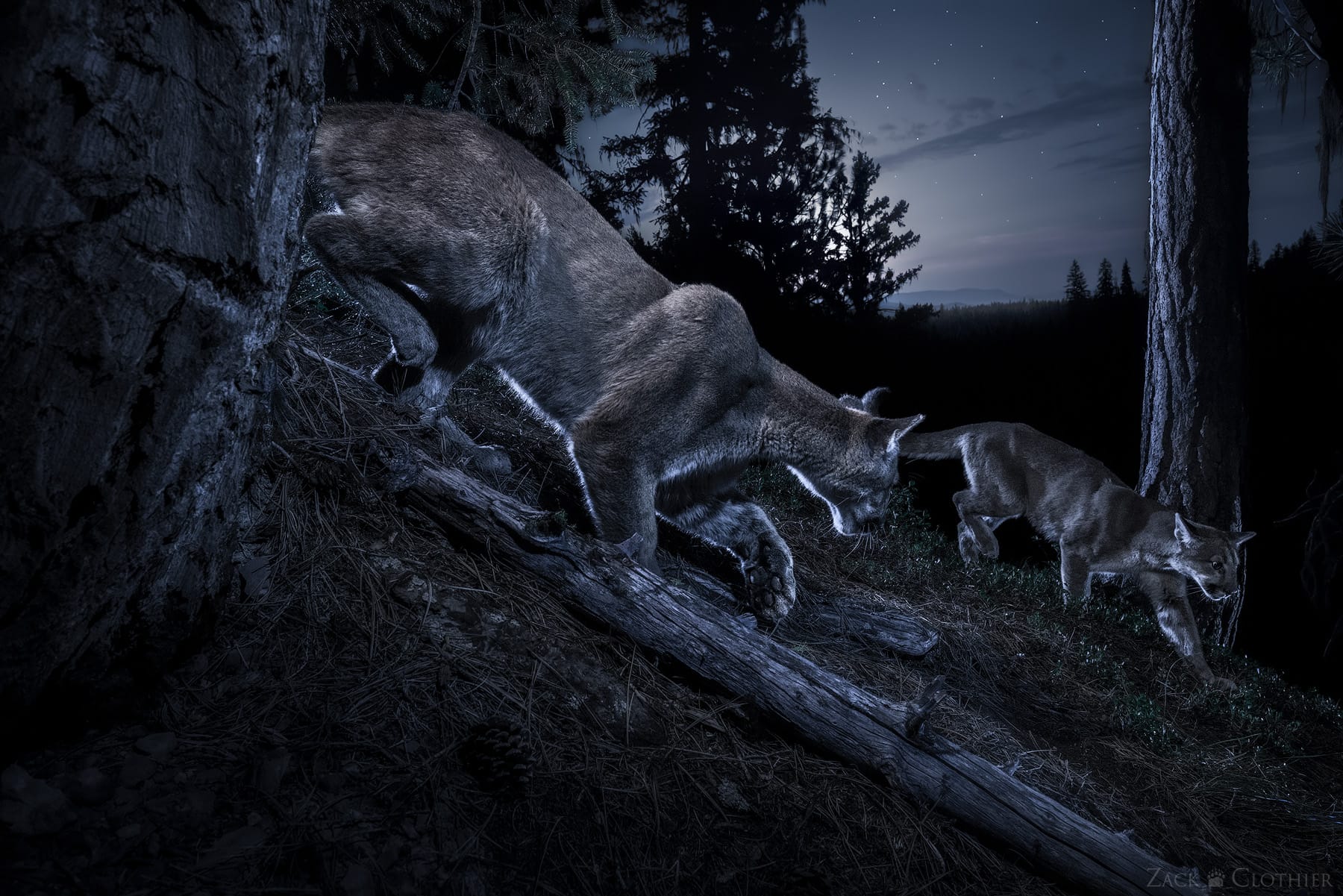
Canada lynx and mountain lions immediately come to mind. Both have an incredible ability to move across the landscape virtually undetected. They can inhabit an area for years while remaining largely unseen, leaving behind little more than the occasional track or other sign of their presence. It is because of animals like these that I renewed my interest in camera trapping.
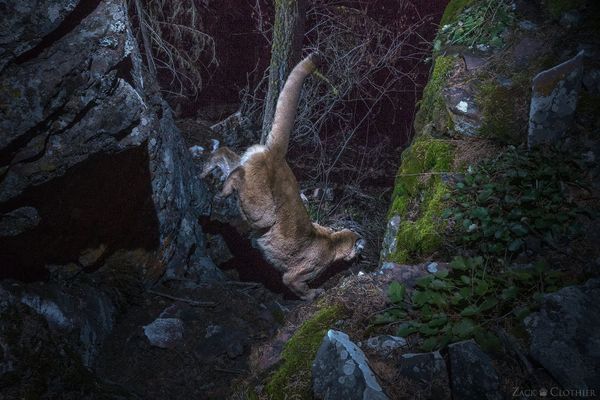
A camera trap, in its simplest form, is a stationary camera triggered by a change in the environment, such as the presence of an animal. It can be as simple as a consumer-grade trail camera or as sophisticated as a professional DSLR or mirrorless camera setup. My goal has always been to create fine art photographs that are worthy of printing and displaying, so I use the latter.
The idea isn't new to me. My first attempts at camera trapping began in the early 2000s, when I built a crude remote camera setup around a 35mm film camera. I rigged it to a PIR sensor taken from a set of motion-activated lights and used a solenoid from a vehicle's automatic door lock to trigger the shutter. The entire contraption was housed inside a heavy metal canister.
It wasn't pretty, but it worked.
At least sometimes.
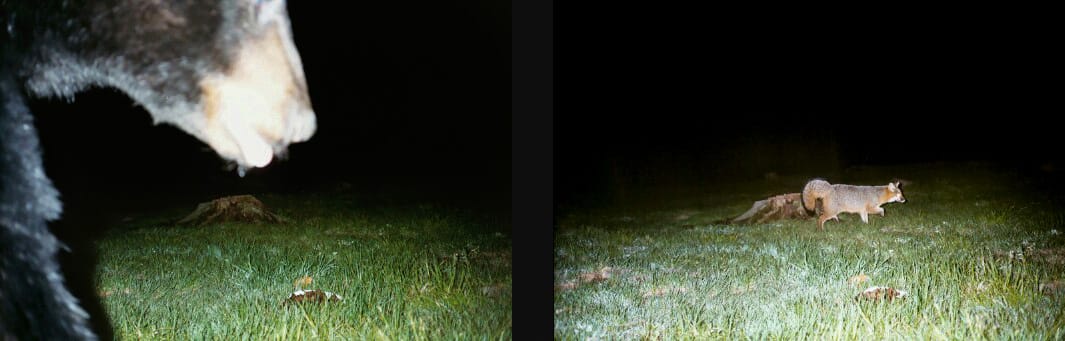
Over time, that homemade setup captured foxes, bears, skunks, deer, and a few other animals that wandered into the camera's path. An on-camera flash provided enough light to photograph them at night, although the results had a look that was anything but flattering. Still, those early experiments opened the door to something that would eventually become a major part of my photography.
Today, the camera traps I build and use are considerably more sophisticated. They incorporate DSLR and mirrorless cameras, wide-angle lenses, remote triggers, sensors, and multiple off-camera flashes. The goal is not simply to document an animal passing through, but to create a photograph that tells a larger story about where that animal lives.
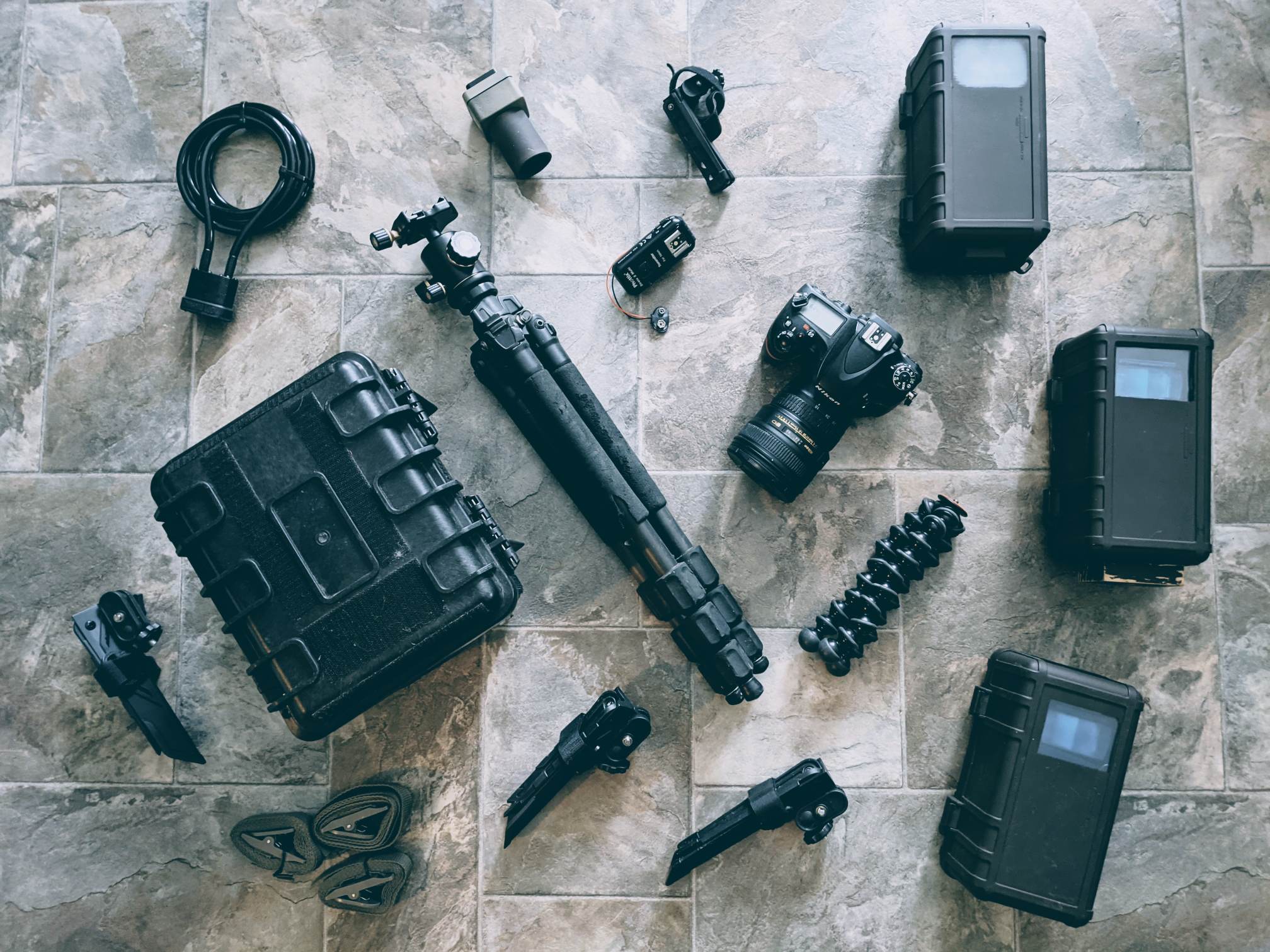
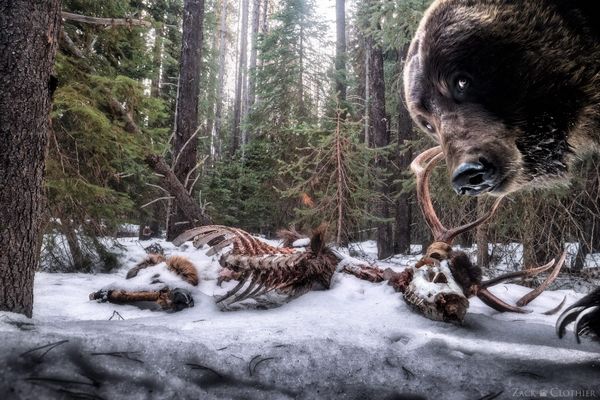
Most traditional wildlife photography is done from a distance using long telephoto lenses. Camera trapping turns that approach on its head. By placing a wide-angle lens directly within an animal's environment, I can show more of the landscape surrounding it and create photographs that would be impossible to make while standing nearby with a camera in my hands.
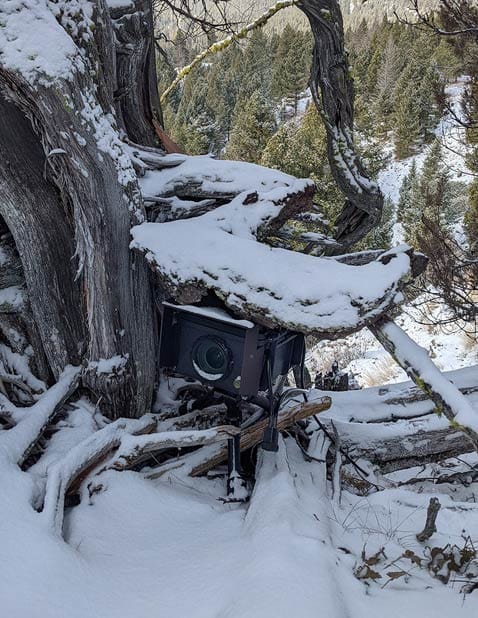
At night, the process becomes even more interesting.
Most commercially available trail cameras rely on infrared LEDs to illuminate their nighttime images and video. A professional camera trap works differently. I use off-camera flashes, or speedlights, positioned throughout the scene to carefully control the light. In some ways, it is like setting up a portrait studio in the middle of the forest, then leaving and hoping the right subject eventually walks into the frame. Of course, that last part is much easier said than done.
Before a camera is ever placed in the forest, I have to answer a much more important question: where?
A camera trap can only photograph a very small patch of the landscape, while the animals I'm hoping to capture may roam across enormous areas. Male mountain lions, for example, can have home ranges spanning well over 100 square miles. For comparison, that's larger than many cities. The odds of randomly placing a camera somewhere within that range and hoping a lion happens to walk through the frame are not very good.
That is why camera placement is everything. When scouting for a particular species, I rely heavily on the clues animals leave behind. Tracks, scat, scrapes, feeding sign, travel routes—each tells part of the story. Once I find evidence that an animal is using an area, I begin looking more closely at the landscape itself. I'm searching for places that naturally funnel an animal's movement: narrow game trails, ridgelines, creek crossings, saddles, fallen timber, or other features that encourage an animal to pass through one specific location.
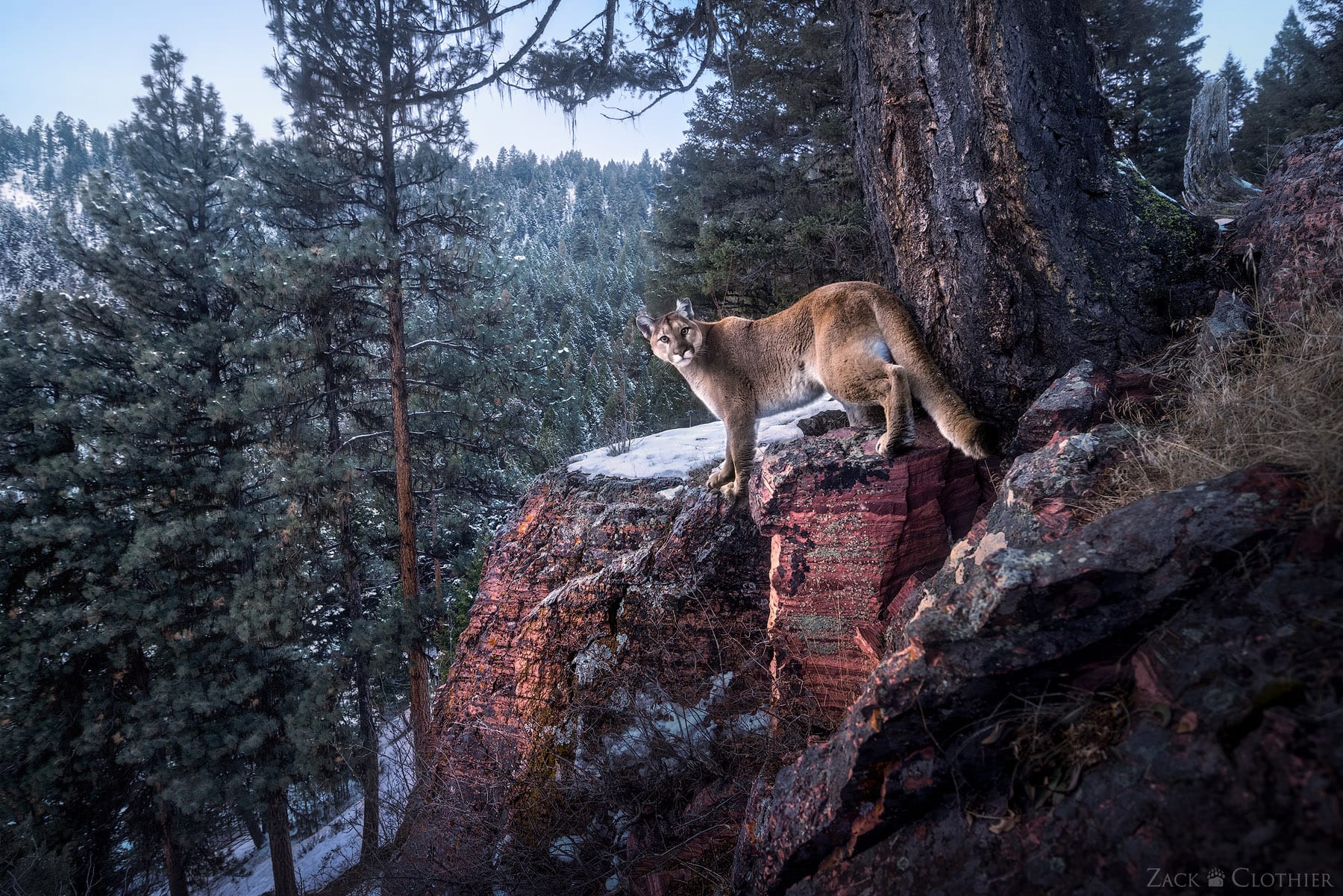
Years spent tracking wildlife has taught me that the landscape is rarely random. Animals often move through it with purpose, following the path of least resistance or returning to areas they have used before. Learning to recognize those patterns is one of the most important skills I've developed as a wildlife photographer.
Now, finding the right location is only half the challenge. Once I decide where the camera will go, I still have to think about the photograph itself. Where will the animal enter the frame? Where will it be positioned? What will the background look like? How will the light fall across the scene? Is there a way to use the surrounding landscape to tell more of the story?
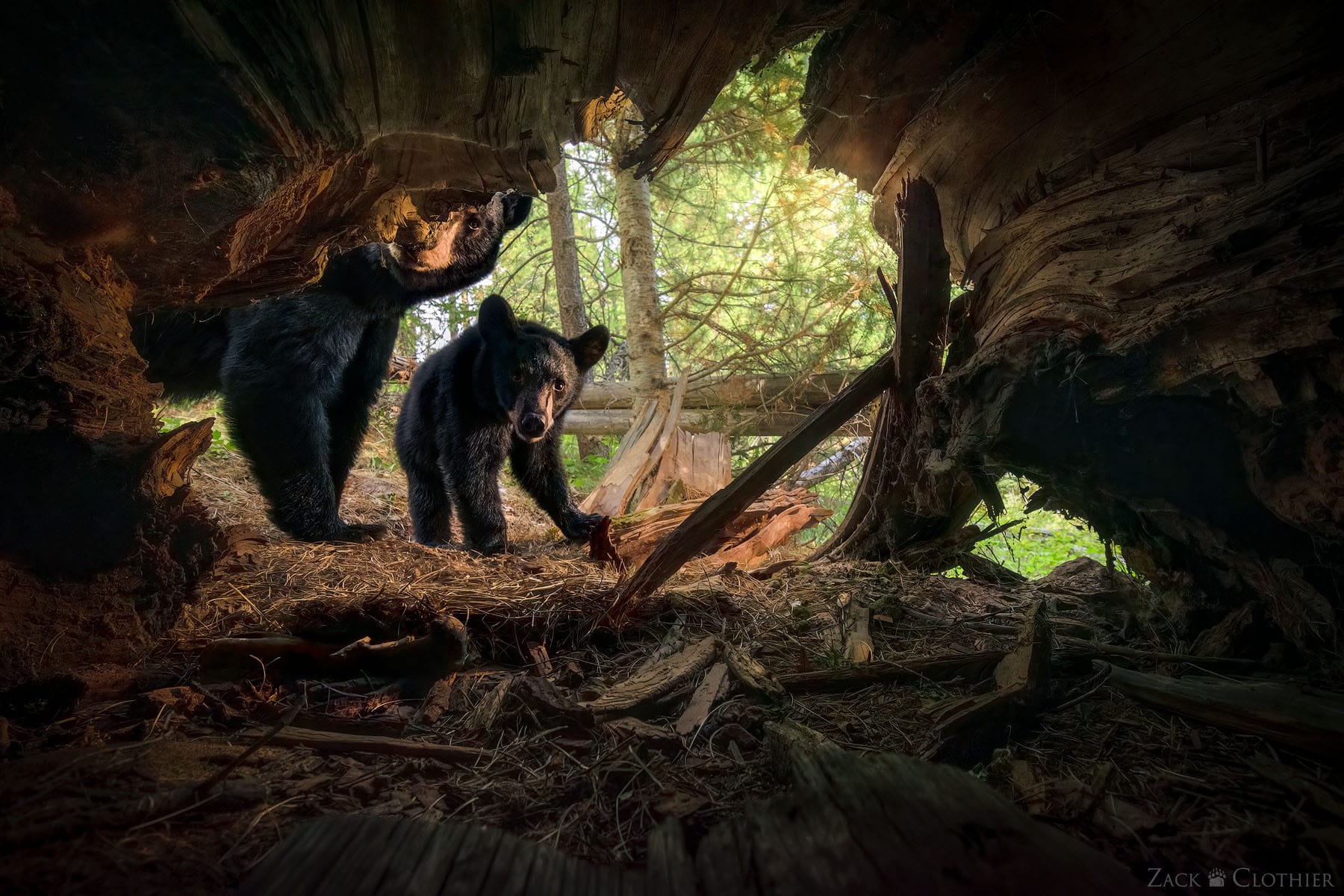
That creative control is what I find so fascinating about camera trapping. The photograph begins long before an animal ever appears. I can choose the composition, position the camera, shape the light, and carefully build the scene around the behavior I hope to capture. Then I leave.
And that is where the real uncertainty begins.
The camera may sit there for days, weeks, or sometimes months. Animals may walk just outside the frame. A sensor may fail. Batteries may die. A branch may fall. A curious bear might decide to investigate and trash the entire setup. Most of the time, things don't happen exactly as planned.
But then there are the times when everything comes together exactly as you envisioned.
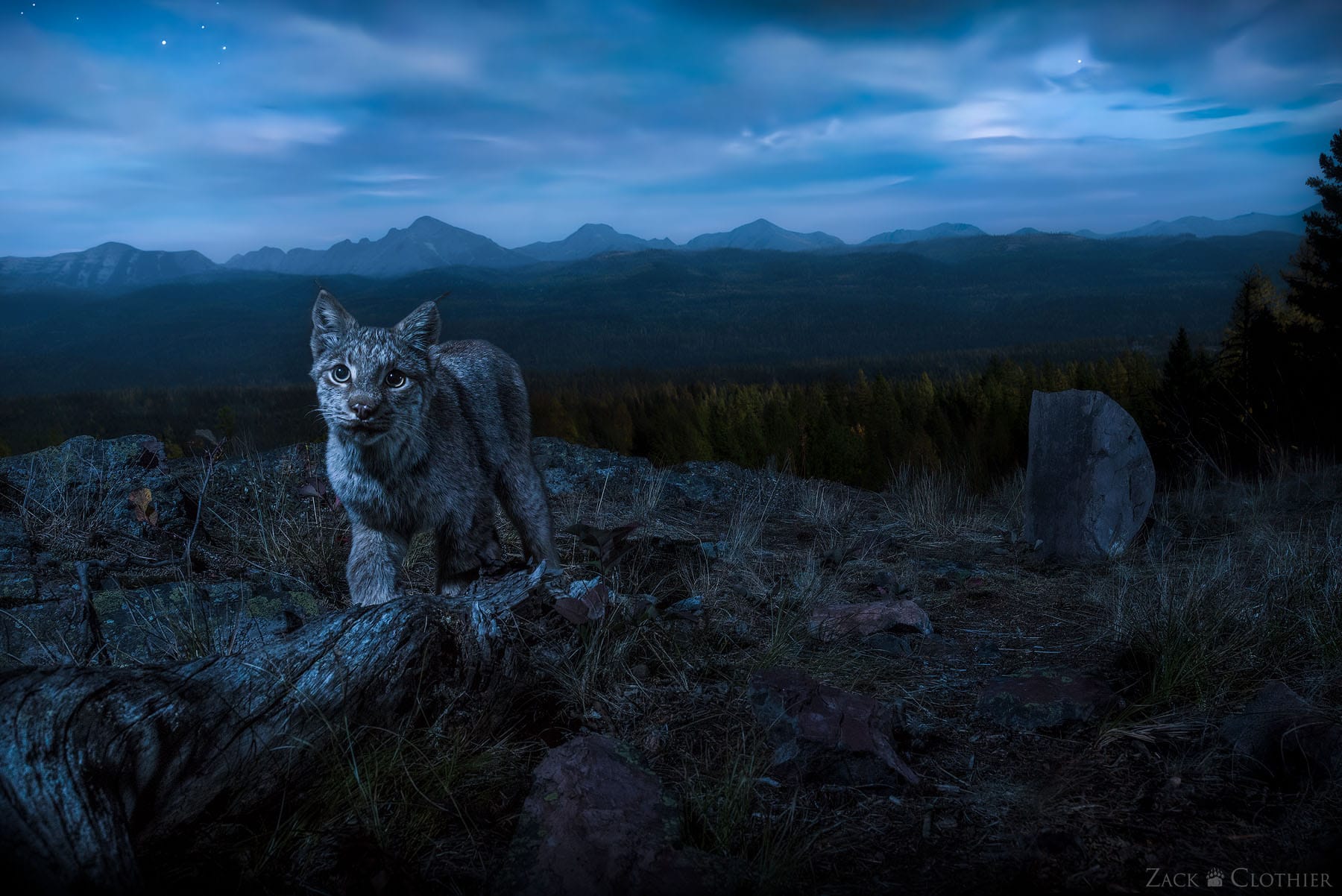
There are few feelings quite like returning to a camera after weeks in the field, opening the housing, and scrolling through the images to find exactly what you had hoped for, or perhaps something you never expected at all. Those moments are the reward for all the scouting, tracking, failed attempts, and time spent trying to understand a small piece of an animal's world.
For me, camera trapping has become about much more than simply capturing a photograph of an elusive animal. It is a way of being present without actually being there. The cameras allow me to see brief moments from a world that continues long after I leave the forest, moments I might never witness with my own eyes. That alone is enough for me to keep coming back.
Somewhere out there, beyond the reach of the trail and long after the last set of footprints disappears beneath fresh snow, the wild is still moving. Animals are following the same hidden routes, hunting, feeding, fighting, surviving, and passing silently through places most people will never see.
Every camera I leave behind is, in a way, a question.
When I return, I get to find out how the wild answered.
Some of the photographs featured in The Wild Journal are available as fine-art prints through my online gallery | Explore the photographs →